
Korean Beef Noodles

Hearty, savory braised beef in a rich Korean-spiced broth served over tender noodles — a cozy, crowd-pleasing bowl for weeknights and gatherings.
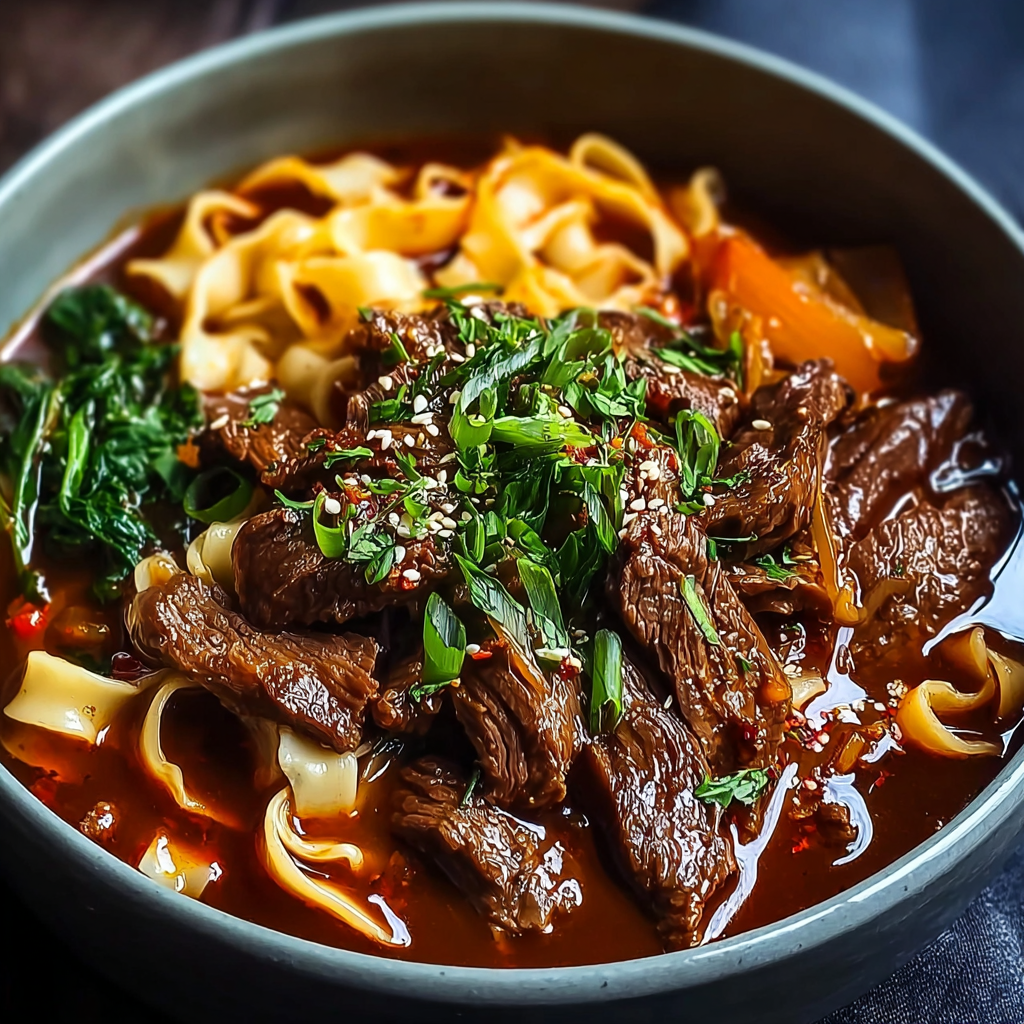
This bowl of Korean beef noodles has become my go-to comfort dinner on chilly evenings. I first developed this version one slow Sunday when I had a 2-pound chuck roast in the fridge and a craving for something richly flavored but simple to assemble. The deep, savory-sweet broth infused with garlic, ginger and a touch of gochujang quickly turned the house into a warm, aromatic haven. Each bite delivers silky, fork-tender beef and the satisfying chew of udon or ramen — the kind of meal that slows conversation and draws everyone to the table.
I love this recipe because it balances East Asian pantry staples with an accessible braising technique. The brown sugar and soy sauce create caramelized depth, while gochujang adds a gentle, complex heat rather than a one-note spice. Sesame oil and fresh green onion at the finish lift the whole bowl, adding bright, toasty notes. Over time I adjusted the simmer time and liquid ratio so the meat falls apart but the broth remains concentrated — a result my family always requests for special weeknight dinners and Sunday lunches alike.
Why You'll Love This Recipe
- Comforting and filling: 2 pounds of chuck braised until fork-tender creates a rich, hearty bowl perfect for cold nights or feeding a crowd.
- Pantry-friendly: uses common staples — soy sauce, brown sugar, garlic, ginger — plus a small spoonful of gochujang for Korean flavor without needing a specialty market.
- Hands-off simmer: after an initial sear, the pot braises for 1.5–2 hours, freeing you to prep sides or relax while dinner makes itself.
- Versatile noodles: works with fresh udon, dried udon, or ramen; swap to soba or rice noodles for variation and dietary adjustments.
- Make-ahead friendly: broth and meat improve after an overnight chill, making this ideal for meal prep or entertaining — simply reheat and cook the noodles just before serving.
- Fast finish: once the meat is done, the entire bowl comes together in under 15 minutes, so you can serve piping hot without last-minute stress.
My family’s reaction the first time I served this was immediate: silence followed by forks scraping bowls clean. It’s a reliably crowd-pleasing dish that also scales well — double the pot for parties or halve it for a cozy dinner for two. The balance of sweet, salty, and umami is something I refine each time, and small tweaks (more gochujang, less sugar) let you adapt it to your palate.
Ingredients
- Beef chuck (2 lb / about 900 g): Look for a well-marbled piece; chuck becomes meltingly tender with long, gentle braising. Ask your butcher for a boneless chuck roast or pre-cut stew meat, trimmed of excess fat.
- Beef broth (4 cups / 960 ml): Use a low-sodium commercial broth or homemade stock for better control of saltiness. A rich homemade bone broth intensifies mouthfeel and depth.
- Water (2 cups / 480 ml): Added to stretch the braising liquid while allowing the soy-brown sugar flavors to concentrate.
- Soy sauce (1 cup / 240 ml): Regular soy sauce gives savory depth; use low-sodium if you prefer to moderate salt and adjust at the end.
- Brown sugar (1/4 cup / 55 g): Light or dark both work; dark brings deeper molasses notes that caramelize with the meat.
- Ginger (2 tbsp, minced): Fresh ginger is essential — its bright heat cuts through the rich broth and brightens the flavor.
- Garlic (4 cloves, minced): Use fresh for the clearest aroma; add with the ginger so they bloom without burning.
- Sesame oil (1 tbsp): Toasty finish oil added at the end for aroma; a little goes a long way.
- Black pepper (1 tsp): Freshly cracked for a clean, warming note.
- Gochujang (1 tbsp): Korean chili paste adds fermented complexity and mild heat; reduce to 1 tsp for less spice.
- Noodles (1 lb / 450 g): Fresh or dried udon or ramen both work — choose your favorite texture. Fresh udon gives a chewy, pillowy bite.
- Green onions (3, sliced): Scallions add bright oniony crunch as garnish.
- Sesame seeds & cilantro (optional): Sesame seeds for crunch and cilantro for herbaceous brightness if you enjoy it.
Instructions
Prepare and season the meat: Pat the 2 pounds of beef chuck dry with paper towels and cut into 1-inch pieces if not already cut. Season lightly with 1 teaspoon black pepper and a tablespoon of soy if desired. Dry surfaces sear better; allow the meat to sit at room temperature for 15 minutes while you heat the pot. Sear for color and flavor: Heat 2 tablespoons neutral oil in a large Dutch oven over medium-high heat until shimmering. Working in batches to avoid overcrowding, brown the beef 2–3 minutes per side until deeply caramelized. Transfer seared pieces to a plate; this fond is crucial for a flavorful braise. Build the braising liquid: Reduce heat to medium, add the minced ginger (2 tbsp) and garlic (4 cloves) to the pot and cook 30–45 seconds until fragrant. Return the beef, pour in 4 cups beef broth, 2 cups water and 1 cup soy sauce. Stir in 1/4 cup brown sugar and 1 tablespoon gochujang until dissolved. Bring to a gentle simmer, scraping the browned bits from the bottom of the pot. Simmer until tender: Cover and simmer on low for 90–120 minutes, or transfer to a 325°F (160°C) oven for 1.5–2 hours. Check at 60 minutes: if the liquid is too high, uncover to reduce; if it’s reducing too fast, add a splash of water. The meat is done when it shreds easily with two forks. Adjust and finish the broth: Once the beef is tender, remove a few pieces and shred or chop to your preferred texture. Taste the broth and adjust seasoning — add a splash more soy for salt, a teaspoon more brown sugar for sweetness, or extra gochujang for heat. Stir in 1 tablespoon sesame oil just before serving for aroma. Cook the noodles: Bring a separate pot of salted water to a boil and cook 1 pound noodles according to package instructions. Fresh udon takes 2–3 minutes; dried udon or ramen varies 4–8 minutes. Drain and rinse briefly under warm water to remove excess starch and prevent sticking. Assemble bowls: Place a portion of noodles in each bowl, ladle hot broth and beef over them, and garnish with sliced green onions, a sprinkle of sesame seeds, and fresh cilantro if using. Serve immediately while hot.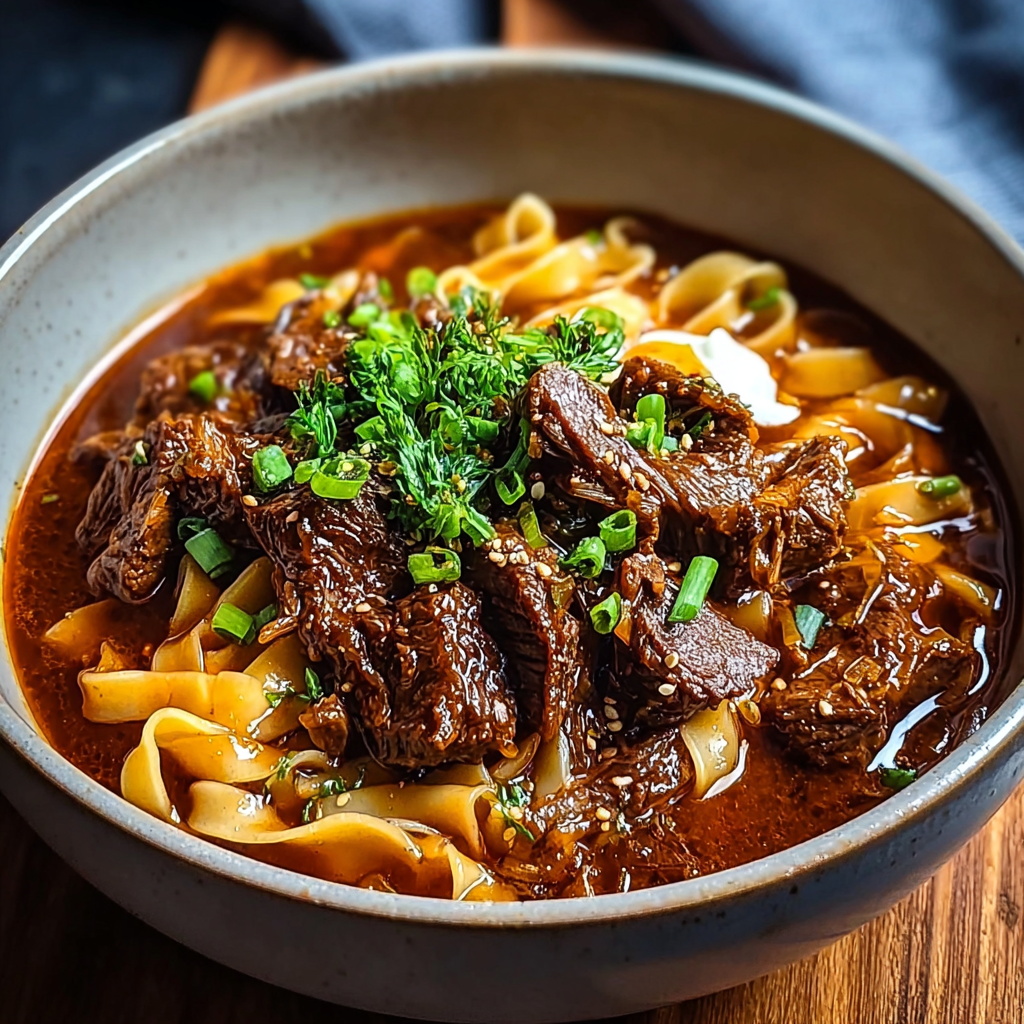
You Must Know
- This dish stores well: refrigerate broth and shredded beef separately from noodles for up to 4 days; freeze the braised beef for up to 3 months.
- High in protein and rich in iron due to the chuck beef; carbohydrate content varies with noodle choice.
- Skim excess fat after chilling for a leaner bowl or spoon off during cooking to adjust mouthfeel.
- Gochujang is fermented and adds umami; a little goes a long way — start small and taste as you go.
My favorite part of this recipe is the way the broth changes after a night in the fridge: flavors meld and the stock tastes even deeper the next day. A family friend once remarked this tasted like an upscale restaurant at home, and that memory always makes me smile when I stir the pot.
Storage Tips
Store cooled broth and shredded beef in airtight containers in the refrigerator for up to 4 days. Keep cooked noodles in a separate container with a teaspoon of oil to prevent sticking and use within 2 days. For freezing, cool the braised beef completely, pack in freezer-safe bags or containers, and label with date — it will keep well for up to 3 months. Reheat gently on the stovetop over medium-low heat; add a splash of water or broth if reduced too much. Avoid freezing cooked noodles — they lose texture; instead freeze only the meat and broth.
Ingredient Substitutions
If you don’t have gochujang, a mix of 1 tablespoon miso paste, 1 teaspoon chili paste, and a pinch of sugar approximates the fermented heat. For gluten-free needs, use tamari or a certified gluten-free soy sauce and swap noodles for rice noodles or glass noodles. To reduce sodium, choose low-sodium beef broth and soy sauce and adjust seasoning after simmering. Short ribs or brisket can replace chuck for a fattier, silkier mouthfeel — increase braising time if bones are included.
Serving Suggestions
Serve bowls with a side of quick kimchi, a simple cucumber salad, or steamed bok choy for a fresh contrast. Garnish options include a soft-boiled egg, toasted sesame seeds, thinly sliced jalapeño for heat, or pickled radish for brightness. For a heartier meal, add sautéed shiitake mushrooms or roasted root vegetables to the broth. Use wide shallow bowls for a beautiful presentation and easy eating.
Cultural Background
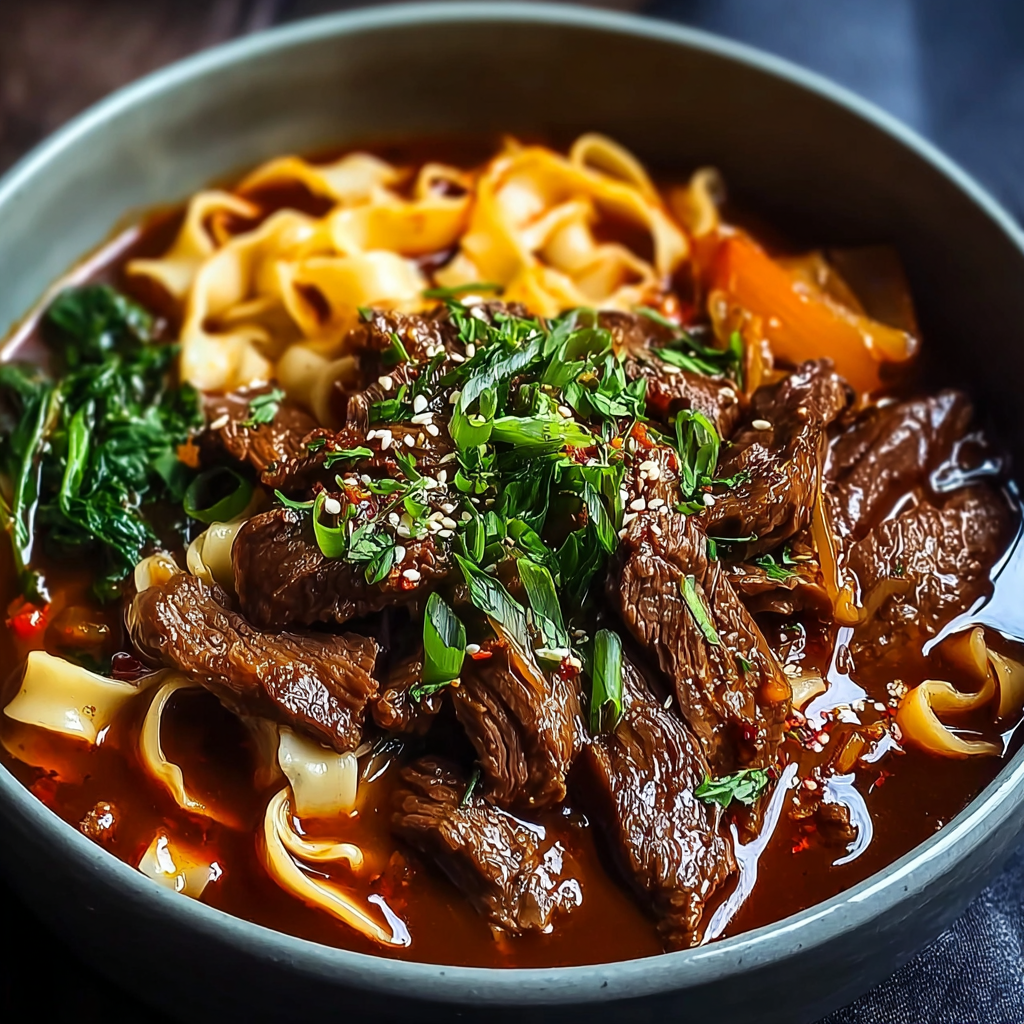
While not an old traditional dish, this bowl draws inspiration from Korean braising techniques and the flavor profile of modern Korean soups and stews. The use of gochujang and sesame oil nods to fermented and toasted elements common in Korean cuisine, while the soy-brown sugar balance mirrors classic banchan glazes. This fusion-style bowl reflects how home cooks adapt traditional flavors into comforting noodle soups for contemporary family meals.
Seasonal Adaptations
In winter, add root vegetables like daikon and carrots to the braise for earthiness and extra body. In spring, lighten the bowl with watercress or baby bok choy and reduce the brown sugar slightly. For summer, prepare the broth ahead and serve chilled with cold noodles and shredded beef for a cold noodle salad topped with spicy vinaigrette and fresh herbs.
Meal Prep Tips
Batch-cook the braised beef and broth on the weekend and portion into individual containers for quick weeknight bowls. Freeze single-serve portions for grab-and-go lunches. To reheat, simmer thawed meat and broth together for 10–15 minutes, heat noodles separately, and assemble. Store garnishes separately to keep textures fresh.
Sharing this bowl with friends always feels like sharing a warm, handwritten recipe card — familiar, comforting and personal. I hope you make it your own, tweak the heat and sweetness, and enjoy the slow-simmered depth that makes a simple bowl feel like an occasion.
Pro Tips
Sear the beef in batches to develop deep browning; overcrowding the pan causes steaming.
Skim fat after chilling the braise for a clearer broth and cleaner mouthfeel.
Taste and adjust seasoning at the end — soy sauce and gochujang vary in saltiness and heat.
Cook noodles separately and rinse briefly to prevent starch from clouding the broth.
This nourishing korean beef noodles recipe is sure to be a staple in your kitchen. Enjoy every moist, high protein slice — it is perfect for breakfast or as a wholesome snack any time.
Tags
Korean Beef Noodles
This Korean Beef Noodles recipe makes perfectly juicy, tender, and flavorful steak every time! Serve with potatoes and a side salad for an unforgettable dinner in under 30 minutes.
Ingredients
Beef & Broth
Sauce & Seasonings
Noodles & Garnish
Instructions
Prepare and season the meat
Pat beef dry and cut into 1-inch pieces. Lightly season and let sit at room temperature for 15 minutes to ensure better searing.
Sear the beef
Brown beef in batches in a hot Dutch oven 2–3 minutes per side until deeply caramelized. Transfer to a plate and reserve the fond.
Build the braising liquid
Sauté minced ginger and garlic briefly, return beef to pot, add 4 cups beef broth, 2 cups water, 1 cup soy sauce, 1/4 cup brown sugar and 1 tablespoon gochujang. Bring to a gentle simmer, scraping up browned bits.
Simmer until tender
Cover and simmer on low for 90–120 minutes (or roast in a 325°F oven). Meat is done when it shreds easily with forks.
Adjust and finish
Shred or chop beef to desired texture. Taste broth and adjust soy, sugar, or gochujang. Stir in 1 tablespoon sesame oil just before serving.
Cook the noodles and assemble
Cook noodles separately according to package instructions, drain and rinse briefly. Place noodles in bowls, ladle broth and beef over them, garnish with sliced green onions and sesame seeds, and serve immediately.
Last Step: Please leave a rating and comment letting us know how you liked this recipe! This helps our business to thrive and continue providing free, high-quality recipes for you.
Nutrition
Did You Make This?
Leave a comment & rating below or tag
@royalrecipe on social media!
Categories:
You might also like...
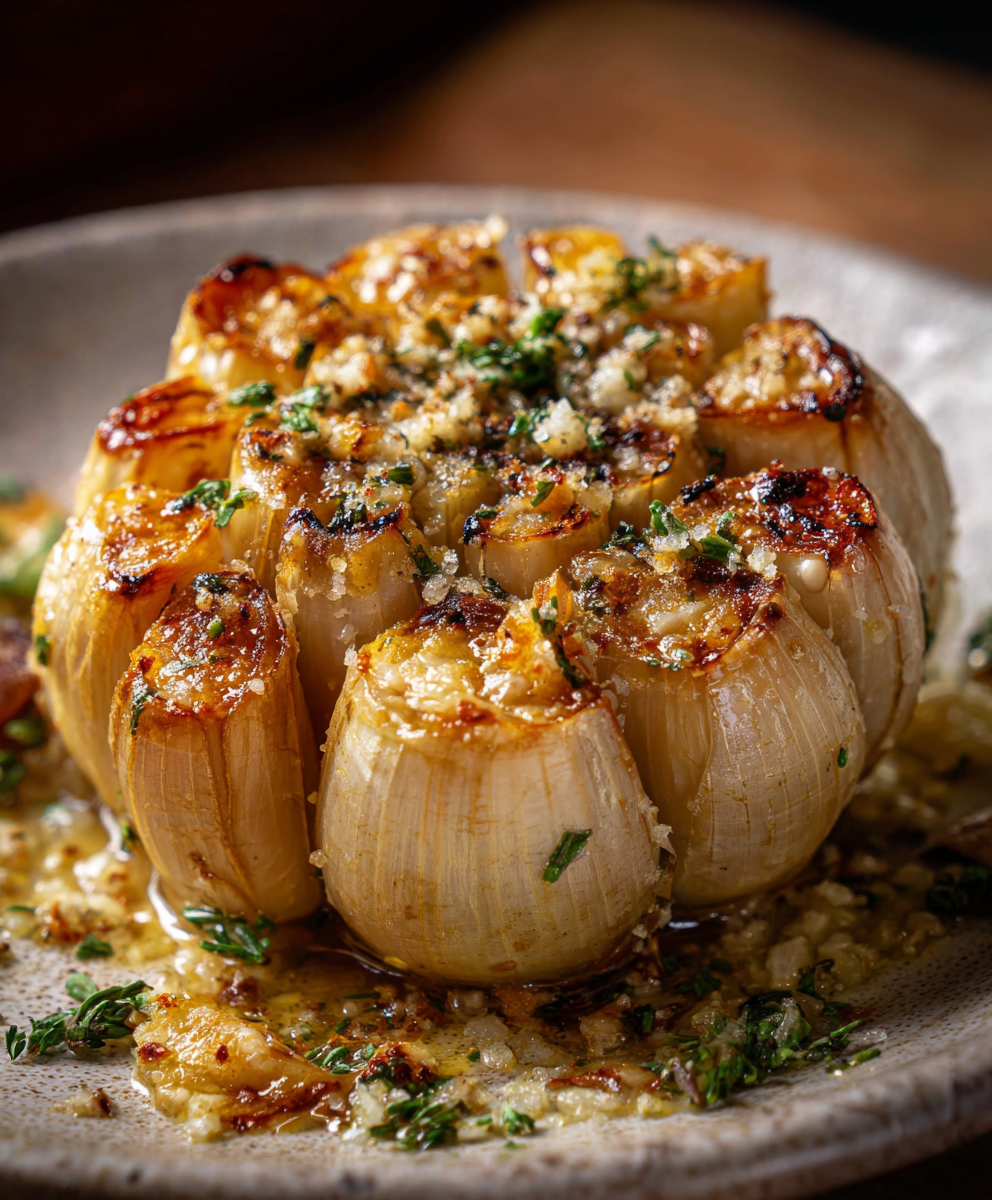
5-Minute Air Fryer Roasted Garlic Magic That Wows
Learn how a 5-minute prep transforms a whole garlic bulb into silky, caramelized cloves in the air fryer. Perfect as a spread, mix-in, or flavor booster that elevates weeknight meals and party plates.

Air-Fried Pizza Rolls
Golden, melty pizza rolls made in the air fryer—crispy outside, gooey inside, ready in under 20 minutes. Perfect for snacks, parties, or quick dinners.

Air-Fried Rice Paper Noodle Rolls
Crispy, light rolls filled with vermicelli, tofu or shrimp, and crisp vegetables—air-fried for a healthier crunch and quick prep.
Did You Make This?
Leave a comment & rating below or tag @royalrecipe on social media!
Rate This Recipe
Share This Recipe
Enjoyed this recipe? Share it with friends and family, and don't forget to leave a review!
Comments (1)
This recipe looks amazing! Can't wait to try it.
Comments are stored locally in your browser. Server comments are displayed alongside your local comments.

Hi, I'm Riley!
What's Popular
30-Minute Meals!
Join to receive our email series which contains a round-up of some of our quick and easy family favorite recipes.